Song Inspiration, Lyric Development, Personal Meaning, Intended Message or Other Insights
The idea for “Past Days, Current Moments” began with a question from one of my Instagram followers:
“Who would you say is the biggest musical influence in the sound you have created?”
I read the question and found myself thinking about it while driving home from work.
I couldn't answer it.
There simply isn't one artist, band or genre I can point to and say, “That's where my sound came from.” The more I thought about the question, the more I realized that whatever musical identity I have today was shaped by everything I had been exposed to over the course of my life.
That realization became the original idea behind “Past Days, Current Moments.” I wanted to somehow travel back through those influences, pay tribute to them and show how pieces of all that music still exist in what I create today.
My earliest musical influences weren't really my choice.
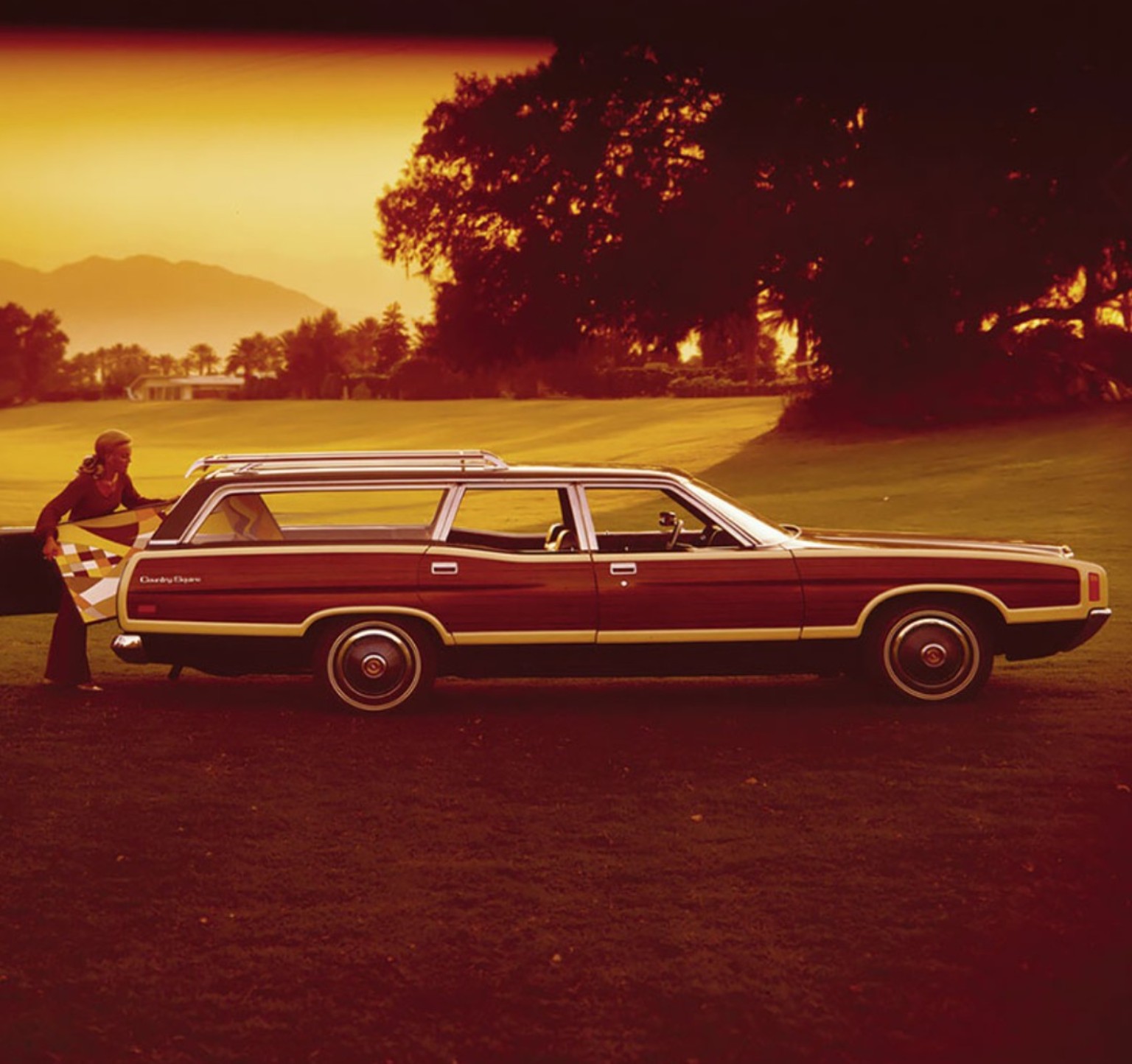
In the 1970s, I was young enough that the adults around me determined what I heard. My dad listened to country music frequently, especially when we were driving. He kept twelve 8-track tapes in the car, although there were three that seemed to stay in almost constant rotation.
One was the 1971 Kenny Rogers and The First Edition greatest-hits album. Songs like “Ruby, Don't Take Your Love to Town,” “Just Dropped In,” “Reuben James” and “I Believe in Music” stayed with me.
Another was Johnny Cash's America: A 200-Year Salute in Story and Song. That record was particularly interesting because it wasn't simply a collection of songs. Music and narration were used together to tell stories from American history.
That memory is directly behind the lyric:
“He'd pop an 8 track in the player,
told me stories that the country taught”
Those “stories” aren't just a general reference to country music. They're also a memory of sitting there listening to Johnny Cash use music and spoken words to tell stories about the country.
The third record in my dad's regular rotation was Dolly Parton's Jolene. My dad and stepmother seemed especially fond of “Jolene” and “I Will Always Love You,” but the song that appealed to me most was “River of Happiness.” There was something about its more upbeat feeling and its message of finding joy in the middle of life's challenges that connected with me.
Looking back, I believe that early exposure to artists who could tell stories through songs had a major influence on the way I eventually learned to write lyrics myself.
But the music at my mother's house was very different.
My mother was deeply driven by her faith. Church wasn't something reserved for Sunday mornings. We attended church functions throughout the week, and the lessons and music from church followed us home.
In “Past Days, Current Moments,” I sing:
“Mom sang along to the Gospel Choir,
Sunday Morning in the kitchen light,
Old Hymns Lifting Up the Ceiling”
Someone hearing those lines might reasonably picture a Sunday-morning memory.
But my mother singing hymns wasn't really a Sunday occurrence. It was an everyday part of our home.
I started singing along with her when I was very young. By four years old, I was singing in the children's choir at church. At seven, I performed my first church solo during a large week-long revival. In the years that followed, singing solos and performing in church musical productions became a regular part of my life.
So gospel wasn't simply another genre I listened to.
It was where I first learned to perform.
By the 1980s, I was beginning to choose music for myself.
One Christmas I received a boombox, and with money from my grandparents I bought two cassettes that I played far more often than I listened to the radio: Mötley Crüe's Too Fast for Love and Prince's 1999.
From Mötley Crüe, songs like “Piece of Your Action,” with its blues influence, and the slightly darker “Merry-Go-Round” caught my attention. From Prince, songs like “Little Red Corvette,” “1999” and “Delirious” became part of the soundtrack of that period of my life.
Those memories eventually became:
“Prince was Purple in the Summer Heat,
Motley Crue had something loud to say”
There is a little artistic license hidden in that first line.
Purple Rain wasn't released until 1984, and I didn't own the album myself until 1986. But when I was trying to compress an entire musical era into a few words, “Purple” immediately connected Prince to one of the most recognizable parts of his musical legacy. Purple Rain was released in June, which gave “Summer Heat” another connection to the reference.
Then came the early 1990s.
I had begun performing in local clubs with my first band, The Flipside. At the same time, Nirvana was rapidly climbing the charts. Their sound—and particularly Kurt Cobain's approach to music and vocal delivery—had a strong influence on what I was writing and how I was singing during that period.
That became another compressed musical memory:
“Seattle sounds in a Flannel Shirt”
Seattle points toward the sound that was emerging from that scene, while the flannel shirt is a deliberate connection to Kurt Cobain and an image closely associated with his live performances.
My musical direction changed again when I stepped away from secular performing for several years and focused on serving as a music director and youth pastor.
During that period, I wrote a number of gospel-inspired songs. I never formally recorded them, but they were performed at churches throughout the West Coast.
Most of those songs were composed on a five-octave keyboard with a large bank of sounds and tones.
Without realizing it at the time, I was developing a method of composing that I still use today. Much of the music I create now begins in essentially the same place—with me sitting at a keyboard and exploring sounds until something begins to take shape.
All of those memories came back because of one seemingly simple question about my biggest musical influence.
As I began trying to turn the answer into a song, I found myself revisiting not only music but different parts of my life. The artists and genres were connected to my father, my mother, church, childhood, adolescence, my first band, performing in clubs, ministry and eventually the way I compose music today.
That made the song difficult to write.
I rewrote every verse several times, trying to figure out how to fit decades of musical influences and memories into a few minutes without simply creating a list of artists and songs.
Eventually, I realized that I didn't need to separate the music from the memories.
I couldn't.
I attach music to my memories.
That is why the finished song allows them to exist side by side. The music isn't merely describing different eras. For me, those sounds are part of how I remember those eras in the first place.
Interestingly, the part of the song that required the least rewriting was the chorus.
I had the idea of using the turning of a radio dial as a way of representing the passing of time, allowing the listener to move from one period of my life into another.
Once that idea came to me, I wrote the chorus in a matter of minutes.
The first version I wrote is essentially the chorus heard in the finished song. I did try to refine it afterward, but every revision seemed to lose something in the lyrical flow. Eventually, I stopped trying to improve what had arrived naturally.
“Past Days, Current Moments” started as an attempt to answer a question about my musical influences.
By the time I finished it, I think I had discovered the answer.
There isn't one.
Country storytelling, gospel, rock, blues, Prince, Mötley Crüe, Nirvana, the music I performed, the music I wrote for churches and all the other sounds I've encountered throughout my life became pieces of the musician and songwriter I am now.
The past isn't something completely separate from the present. Pieces of it continue traveling with us, sometimes in ways we don't even recognize until something causes us to look back.
For me, music is one of the strongest connections between those past days and my current moments.
And there is still one more specific artist and song reference implied in the chorus.
Can you recognize it?